
Los Angeles Soft-Story Ordinance
Los Angeles has a mandatory soft-story retrofit program for certain older wood-frame buildings with weak or open lower stories. The City’s Soft-Story Retrofit Program is enforced by LADBS under Ordinance No. 183893 and Ordinance No. 184081.
The program focuses on buildings with tuck-under parking, open ground-floor areas, or similar weak first-story conditions that performed poorly in past earthquakes. Orders to Comply began going out in phases in 2016 based on the building’s priority category.

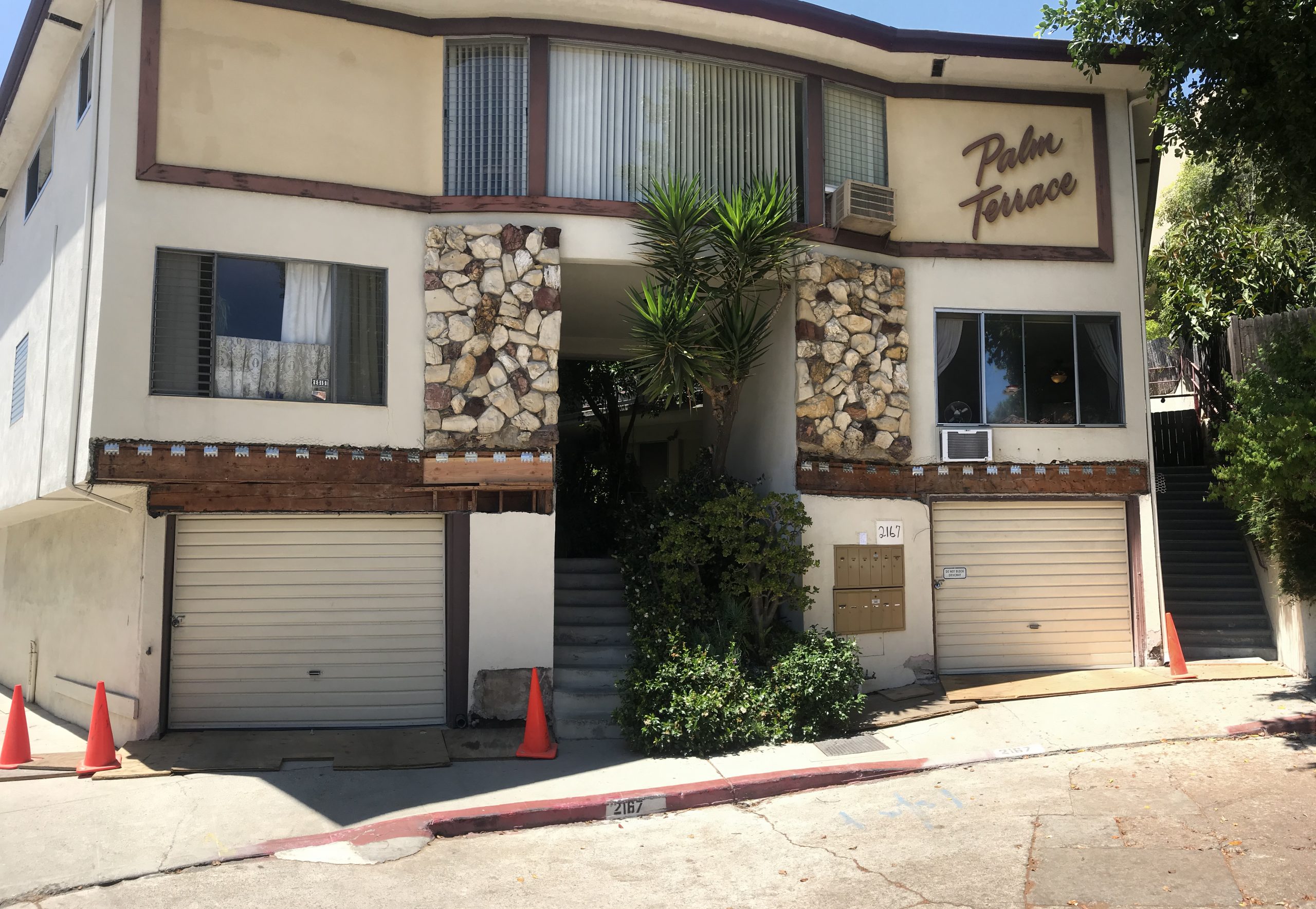
Which Buildings Are Covered?
LADBS identifies buildings in scope using the following criteria:
- Two or more stories of wood-frame construction
- Built under building code standards enacted before January 1, 1978
- Ground-floor parking or other similar open floor space
- More than three dwelling units, since the program does not apply to residential buildings with three or fewer units
These criteria generally apply to older apartment and condominium buildings with open or weak lower levels. Owners should verify a property’s status through LADBS records rather than relying only on visual assumptions.
Los Angeles Soft-Story Compliance Timeline
The compliance timeline begins when the owner receives an Order to Comply. LADBS lists the following requirements:
- Within 2 years: submit proof of previous retrofit, submit retrofit plans, or submit plans to demolish
- Within 3.5 years: obtain a permit to start construction or demolition
- Within 7 years: complete construction
LADBS also phased the original orders by priority group, beginning in May 2016 for larger or higher-priority buildings and continuing through 2017 for smaller buildings, condos, and commercial properties.


Tenant Habitability Plan and Cost Recovery
Los Angeles soft-story retrofit projects may also involve Los Angeles Housing Department requirements. LADBS directs owners to LAHD for Tenant Habitability Plan and cost recovery information.
A Tenant Habitability Plan may be required when retrofit construction affects occupied rental housing. The City’s cost recovery process may allow eligible owners to recover a portion of allowable seismic retrofit costs through rent adjustments, subject to LAHD rules and approval.
Current Status for Los Angeles Property Owners
Because Los Angeles issued orders beginning in 2016 and 2017, many affected buildings are now beyond their original compliance milestones. Owners should confirm whether their building has an open Order to Comply, whether retrofit plans were submitted, whether permits were obtained, and whether construction has been completed and finaled.
LADBS provides tools to verify whether a building applied and view soft-story compliance information. Property-specific records are the safest way to confirm current status.
Get Clear on Your Los Angeles Retrofit Status
If your Los Angeles property received an Order to Comply or has unresolved soft-story documentation, the next step is understanding what LADBS records show and what work remains. Retrofit1 can help property owners review potential soft-story concerns, coordinate licensed structural evaluation, and plan the path through plans, permits, construction, final inspection, and compliance documentation when retrofit work is required.
When a building has seismic concerns beyond the Los Angeles soft-story ordinance, those improvements can be evaluated through earthquake retrofitting in Los Angeles while keeping ordinance compliance and broader retrofit planning clearly separated.